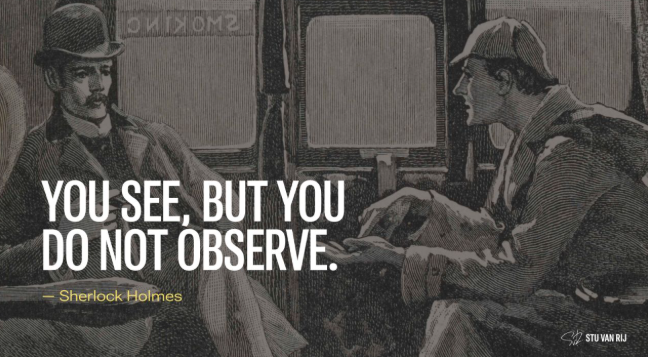
“You see, but you do not observe”

Sherlock Holmes said it. And he’s right.
We’re all told to read the room. But we can’t read what we haven’t noticed. We can’t read a person we haven’t observed.
Seeing is passive. Observation is active. Which means we do a lot more of the former.
Which is a problem for those conversations that matter.
Take Bob. He walked into his stakeholder meeting on autopilot. A few talking points. Feeling good. Ready to go. What he didn’t notice: his stakeholder was talking less. A few more frown lines than usual. Sitting more upright. She was worried about something, but was struggling to raise it. Bob barrels on.
And now Bob has exited the meeting without a heads-up of an impending change that could derail his project. There was a window to do something about it. But Bob jogged on past it.
Whenever we walk into a meeting, there’s a moment of truth. Will we take time to notice, or will the gravity of our agenda absorb our attention?
That’s why the first five minutes are so important. Attention in or attention out.
Try this in your next meeting. Make a decision before you walk in: Notice first. Use the first five minutes while everyone is settling into place to switch off autopilot and switch on your curiosity.
What might you notice about their mood? What seems important to them? What’s changed since the last meeting?
You have to notice a room before you read it.
What will you notice that others miss?